










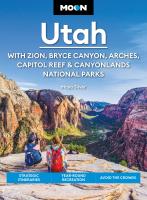







Dead Horse Point State Park
Just east of Canyonlands' Island in the Sky District and a short drive northwest of Moab is one of Utah's most spectacular state parks. Here at Dead Horse Point the land drops away in sheer cliffs (435/259-2614, www.stateparks.utah.gov, $10per vehicle day use).
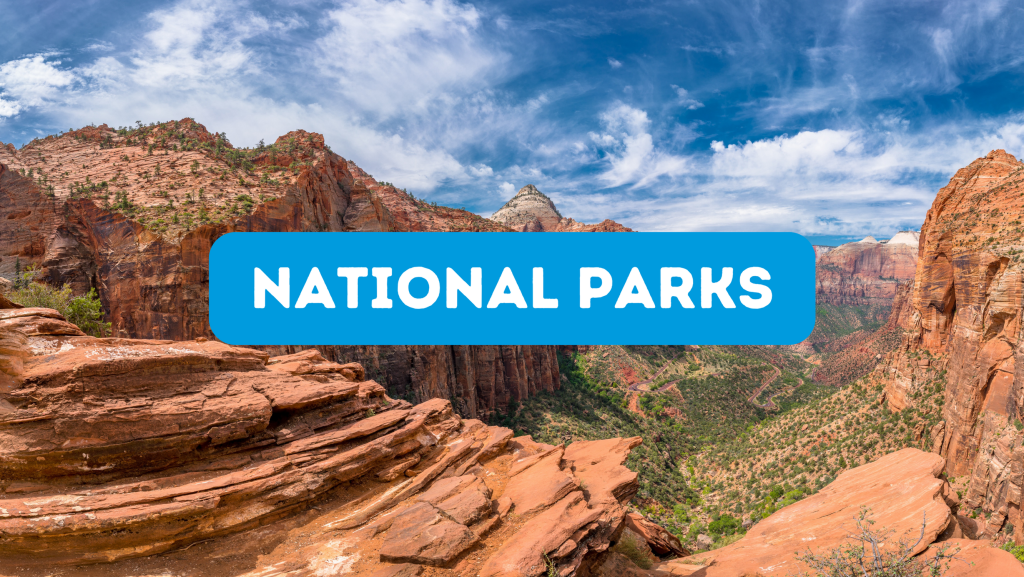
Two thousand feet below, the Colorado River twists through a gooseneck on its long journey to the sea. The river and its tributaries have carved canyons that reveal a geologic layer cake of colorful rock formations. Even in a region of impressive views around nearly every corner, Dead Horse Point stands out for its exceptionally breathtaking panorama.
You'll also see below you, along the Colorado River, the result of powerful underground forces: Salt, under pressure, has pushed up overlying rock layers into an anticline. This formation, the Shafer Dome, contains potash that is being processed by the Moab Salt Plant. You can see the mine buildings, processing plant, and evaporation ponds (tinted blue to hasten evaporation).
A narrow neck of land, only 30 yards wide, connects the point with the rest of the plateau. Cowboys once herded wild horses onto the point, then placed a fence across the neck to make a 40-acre corral. They chose the desirable animals from the herd and let the rest go.
According to one tale, a group of horses left behind after such a roundup became confused by the geography of the point. They couldn't find their way off and circled repeatedly until they died of thirst within sight of the river below. (You may also hear other stories of how the point got its name.)
Besides the awe-inspiring views, the park offers a visitor center (with displays), a campground, a picnic area, a group area, a nature trail, and hiking trails. Rangers lead hikes during the busy spring season and on some evenings during the summer, including monthly full-moon hikes.
Mountain bikers, including novices, should bring their rides to Dead Horse Point, where the new Intrepid Trail System has about 15 miles of slickrock trails in three loops that range from a mile-long beginner's loop to a more challenging nine-mile loop. All start at the visitor center and have great views into the canyon country.
Visitor Center
Stop at the Visitor Center (8 a.m.-6 p.m. daily Mar. 15-mid-Oct.; 9 a.m.-5 p.m. daily mid-Oct.-Mar. 14) for registration and exhibits about the park. Staff can answer questions and provide checklists of local flora and fauna. A short slide presentation is given on request. In summer, rangers give talks at the amphitheater behind the visitor center. Books, maps, posters, postcards, T-shirts, charcoal, ice, and soft drinks are available for purchase.
A short nature trail introduces the high-desert country and its plants. Continue 1.5 miles on the main road to viewpoints and picnic areas on the point itself. Primitive trails connect the point with several other overlooks, the visitor center, and the campground. Ask for a map at the visitor center.
Whether you're visiting for the day or camping at Dead Horse Point, it's best to bring plenty of water...although water is available here, it is trucked in.
Campground
Kayenta Campground (800/322-3770, www.reserveamerica.com, $20 camping fee, $8 reservation fee), just past the visitor center, offers sites with water and electric hookups but no showers. The campground nearly always fills up during the main season. Either make reservations ahead of time or try to arrive by early afternoon to ensure a space. Winter visitors may camp on the point; no hookups are available, but the restrooms have water.
Getting to Dead Horse Point State Park
Dead Horse Point is easily reached by paved road, either as a destination itself or as a side trip on the way to the Island in the Sky District of Canyonlands National Park. From Moab, head northwest 10 miles on U.S. 191, then turn left and go 22 miles on Highway 313.
The drive along Highway 313 climbs through a scenic canyon and tops out on a ridge with panoramas of distant mesas, buttes, mountains, and canyons. Several rest areas are along the road.
© W.C. McRae and Judy Jewell from Moon Utah, 9th Edition
Buy Moon Travel Guides
Search
Moon Travel Guides make independent travel and outdoor exploration fun and accessible. With expert and adventurous travel writers delivering a mix of honest insight, first-rate strategic travel advice, insider travel tips and an essential dose of humor, Moon Travel Guides ensure that travelers have an uncommon and entirely satisfying experience. Each travel book is filled with unique trip ideas, easy-to-use maps, and detailed information on sights, restaurants, and accommodations. Moon Travel Guides not only point you in the right direction, they inspire new ideas and adventure. Whether you are seeking a relaxing beach trip to Hawaii, or an adventure travel trip to the rainforests of Costa Rica, Moon guidebooks—and Moon.com—are with you every step of the way. Founded in 1973, the Moon Travel Guides series includes Moon Handbooks, Moon Outdoors, Moon Metro, Moon Living Abroad and Moon Spotlight travel books. Moon is based in Berkeley, California and is a proud member of the Perseus Books Group.