






Moon Staff Blog
About this blog
The Moon Water Cooler is a place for Moon staffers to share what's new in their world. Check back often to hear about author events, book releases, travel trends, and maybe even some staff recommendations for what part of the world to explore next.
Recent Posts
- Two Reasons This Week is Awesome: Earth Day and National Park Week
- The Glory, the Groundwork, and the Grind of Travel Writing
- Finding Pizza Nirvana in Nashville
- Guest Interview: Exploring Offbeat Mexico with Churpa Rogers
- Guest Interview: The People's Guide to Mexico Authors Carl Franz and Lorena Havens
- Guest Post: Top 10 Gifts for Road Trippers
- Hawaii Giveaway Winner Announced
- Win a Round-Trip Ticket to Hawaii from Moon and Hawaiian Airlines!
- Why Moving to Belize Isn’t as Hard as You’d Think
- From Dosas to Dumplings: My Eight Favorite Toronto Restaurants
- Guest Post: At Least We Have Pizza – The Cost of Living in Mexico vs. New York City
- Hawai'i: A Foodie Paradise — Part Two
- Hawai'i: A Foodie Paradise — Part One
- Exploring California via Road Trip with Moon California Road Trip
- Enjoying the Outdoors in the Black Hills of South Dakota

Guest Interview: The People's Guide to Mexico Authors Carl Franz and Lorena Havens
The People’s Guide to Mexico authors Carl Franz and Lorena Havens have been exploring Mexico since the early 1960s. The warm, easygoing style and personal insights of the writer and editor team have inspired generations of travelers. When not on the road—or living somewhere in Mexico—they can usually be found at their cabin in the North Cascades of Washington. We asked Carl and Lorena to share with us some of their background and the history of the book.
1. This is the 14th edition of The People's Guide to Mexico and 2012 marks its 40th anniversary. Please tell us the story of how your book came to be.
The People’s Guide to Mexico began on a Mexican beach in 1970 as a series of detailed letters to friends in Alaska who were eager to join up with Lorena, Steve and myself on our first major van odyssey through Mexico. It developed further through storytelling around countless campfires as we traveled on to Guatemala, El Salvador and Belize.
There were no guidebooks at the time that explained how to travel in Mexico and Central America in more than general terms. Our friends and other travelers constantly peppered us with practical questions—how to take a local bus, where to eat cheaply, how to find a budget hotel room and more. With Steve looking over my shoulder and contributing his vast personal experience, I started hammering away on my Olympia portable typewriter. I was easily bored, however, and tended to drift off-topic into stories about our current adventures. Lorena applied her organizational skills in an attempt to keep me focused.
In a small house overlooking Lake Atitlan the manuscript piled beside me eventually reached over one thousand typewritten pages. It became apparent that things had gotten out of hand. Was it a book? Everyone we asked said the answer was obviously, “No!” Who would possibly publish an unknown author writing about off-beat Mexico?
On our slow return northward, we visited John and Eve Muir in San Miguel de Allende. John’s book, How To Keep Your Volkswagen Alive was selling like crazy and he’d decided to start his own publishing company. He and Eve took a quick look at our manuscript—the rest, as they say, is history.
2. How has traveling in Mexico changed since the 70's and how is the travel experience the same?
There is no aspect of traveling in Mexico that hasn’t changed dramatically since the seventies, at least in a practical sense. In those days, for example, there were almost no road or directional signs, even on major highways. It wasn’t just easy to get lost and confused, it was inevitable; an integral part of the Mexican experience.
People weren’t used to seeing foreign travelers outside of the most obvious tourist attractions and resorts. Anyone who didn’t look like the typical gringo resort-hopping tourist drew a lot of attention, some of it definitely unwanted (especially from the police).
Mexico’s public service infrastructure was very weak and unreliable—it often took hours and a lot of pesos to make an international phone call. Changing traveler’s checks was a drag.
Of all the changes we’ve seen, however, I don’t think anything can top the arrival of the internet and cell phones. Second on the list would be the tremendous improvement in highways and transportation.
What hasn’t changed in Mexico, or not as much? The hospitality and generosity of the Mexican people, as well as their incredible sense of humor.
3. The People’s Guide to Mexico is often cited as one of the books that launched the independent travel movement. What is your reaction to this?
Since The People’s Guide was first published in 1972, we’ve received thousands of letters, emails and personal testimonials from people who say that the book gave them the confidence and tools they needed to visit Mexico. So, yes, in that sense we did inspire others to grab a backpack or a suitcase and head out. It isn’t easy to remember, but in the sixties and early seventies tourism outside of the U.S. was almost exclusively for people with money. The People’s Guide was for the rest of us—“independents” with more time than money, along with a strong curiosity and appreciation for the “real” Mexico.
As an aside, one of the most gratifying compliments we heard in the book’s early days was from travelers who recommended it for travel to India and Asia. “The People’s Guide is the best guidebook to travel in the Third World” was the way one person put it.
4. What's the one site/activity/experience in Mexico that should be on a traveler's "bucket list"?
My “bucket list” tends to be filled with apparently ordinary experiences that travelers ordinarily do not think of when away from home. For example, I’ve had haircuts in small town barbershops in Mexico, India and other countries. It’s an experience I don’t necessarily want to repeat but one I seldom forget.
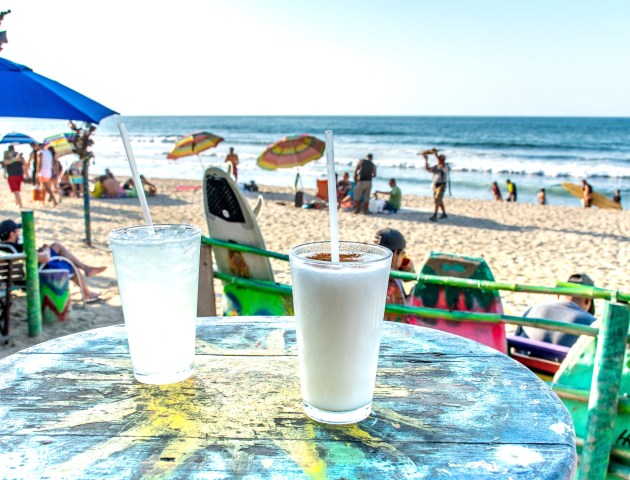
If you are near a beach, there’s nothing more Mexican than spending an entire afternoon in a seaside restaurant, eating and drinking your way through the menu, one delicious dish after another. Hire a taxi for an hour in any mid-sized city and ask the driver to show you the sights. I can’t pass up a Mexican hardware store or street market without looking for handmade tools and ingenious mouse traps.
Lorena’s suggestion is to take a morning bus to a small town you’ve never heard of, eat breakfast there, have your shoes shined and wander the streets. Lorena looks for yarn and interesting little gifts as an excuse to poke her head in small shops. Smile a lot.
Photo credit © Shannon Zellerhoff
Buy Moon Travel Guides
Search
Moon Travel Guides make independent travel and outdoor exploration fun and accessible. With expert and adventurous travel writers delivering a mix of honest insight, first-rate strategic travel advice, insider travel tips and an essential dose of humor, Moon Travel Guides ensure that travelers have an uncommon and entirely satisfying experience. Each travel book is filled with unique trip ideas, easy-to-use maps, and detailed information on sights, restaurants, and accommodations. Moon Travel Guides not only point you in the right direction, they inspire new ideas and adventure. Whether you are seeking a relaxing beach trip to Hawaii, or an adventure travel trip to the rainforests of Costa Rica, Moon guidebooks—and Moon.com—are with you every step of the way. Founded in 1973, the Moon Travel Guides series includes Moon Handbooks, Moon Outdoors, Moon Metro, Moon Living Abroad and Moon Spotlight travel books. Moon is based in Berkeley, California and is a proud member of the Perseus Books Group.

Safety is no problem
Posted by ssona on January 9, 2013 at 6:01 pm
I've visited Rosarito Beach for the past couple of years and there's never been any issue in crime. I've always felt safe. Then again I've always stayed in the tourist part of the town and I've never gone off looking for trouble. If you're looking for trouble, chances are you might find it but otherwise Rosarito and the Baja California region is pretty safe.
http://www.rosaritoinn.com/
Safety in Mexico
Posted by lmartone on December 27, 2012 at 10:12 pm
This is a fascinating interview - thanks for sharing! I do have one question though...
When I was working on MOON BAJA RV CAMPING back in 2007/08, I knew that I needed to cover the issue of safety while traveling in Mexico. So, I'm just wondering - how do the authors feel that traveling to Mexico has changed, from a crime/safety perspective, since the 1970s?
Let's start with what hasn't
Posted by Carlfranz on January 4, 2013 at 8:01 am
Let's start with what hasn't changed since the 70's: the misconception that travel in Mexico isn't as safe as travel in the U.S. As I wrote in The People's Guide To Mexico many years ago, statistics may offer cold comfort but crime studies consistently indicate that very few tourists in Mexico encounter serious safety issues.
In the Seventies, when Americans weren't often seen outside of Mexican resorts, the big worry up north seemed to focus on unwelcome encounters with mustachioed bandits. In fact, the most likely bandit in those days was a Mexican cop, trying to supplement a pitiful salary with extra-official bribes and extortion. It could be a pulse-raising hassle for tourists who ran into these situations but was rarely dangerous.
In the last several years narco violence has become the big issue. Once again, however, studies (including a recent one by Harvard U.) show that the drug war seldom involves tourists or foreign residents of Mexico. The violence is almost entirely between rival drug cartels, and between the cartels and the Mexican government.
But... the increased presence of the Mexican military in public places, highway checkpoints, and other anti-narco operations can definitely be unsettling to visitors (and Mexican citizens as well).
In conclusion, my advice about staying safe in Mexico really hasn't changed since the book first came out in 1972. Use commonsense street smarts, don't drive at night unless you really have to, avoid drugs and drinking "scenes", and be polite to cops and soldiers.
Most importantly, try to relax! We've had many letters and emails from readers who tell us that once they got to Mexico and had spent a few days there, that they realized how groundless their fears were. On the other hand, Mexico isn't for everyone. If you can't enjoy yourself, it might well be better to choose another destination.
Safety issues everywhere
Posted by lmartone on January 4, 2013 at 2:01 pm
Thanks, Carl, for taking the time to answer my question about safety issues in Mexico. You're absolutely right that America can also be a dangerous (or at least unsettling) place for visitors. As a New Orleans native, I know all too well how crime can affect tourists and residents alike, and just as you have an affinity for Mexico, in spite of its modern issues, I have a fierce passion for the Big Easy - yet I'm quick to admit that bad things can and do happen here. That said, your advice to use commensense, avoid drugs, and be polite to cops certainly applies in New Orleans as well - as does avoiding deserted streets at night.
As an Oaklander, I can feel
Posted by Wayne Bernhardson on January 4, 2013 at 12:01 pm
As an Oaklander, I can feel a certain empathy with Mexicans on these issues. Oakland is a terrific place to live, and a delightful place to visit as well, but narco/gang violence has tainted the city's reputation. That said, we all have an obligation to do whatever we can to help overcome these problems.
A landmark book, and
Posted by Wayne Bernhardson on December 26, 2012 at 6:12 pm
A landmark book, and uniquely useful despite the total absence of specific destination coverage.