





































Anakena

printer iconPrintemail iconEmailfavorites iconSave to Favorites

From Hanga Roa, a smooth paved road goes northeast to Anakena, the island’s best beach and one of its major and best-restored archaeological sites. Several other points of interest dot the north coast road as it bumps eastward toward Península Poike.

In the approximate geographical center of the island, and roughly midway between Hanga Roa and Anakena, Fundo Vaitea contains Rapa Nui’s best cultivable land. Both Dutroux-Bornier and Williamson, Balfour & Company used it for crops and livestock, but the government development agency Corfo eventually took it over.

At present, some of the land is being redistributed to islanders in five-hectare plots that are now being cultivated for pineapple, mango, and similar crops—transforming the island’s contemporary cultural landscape. While some Rapanui have objected to government “land grants,” on the rationale that Chile has no right to grant lands that never belonged to it, one local has reached an agreement with the luxury hotel chain Explora to build elite accommodations nearby.

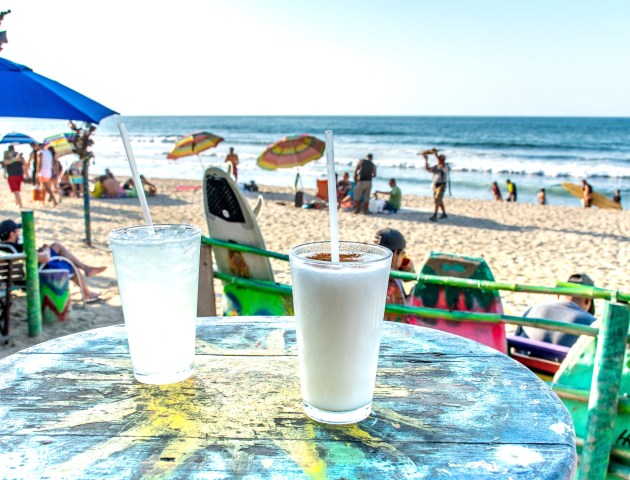
Legendary as the ostensible landing point for Hotu Matua (logical enough despite a lack of evidence), Playa Anakena is the island’s only significant sandy beach, a popular spot for swimming, sunbathing, and Sunday picnics. Backed by a plantation of palms, it also has picnic tables, fire pits, and toilets.

Anakena is more notable, though, for its two substantial ahu. Heyerdahl’s Norwegian expedition reerected the single moai on Ahu Ature Huki, while Rapanui archaeologist Sergio Rapu oversaw the 1979 restoration of Ahu Nau Nau and its seven moai, four of which sport pukao (two of the other three are badly damaged). In the course of restoration, the researchers found fragments of inlaid coral eyes, which they were able to reconstruct.

A short distance east of Anakena, Playa Ovahe is the island’s next-best beach, sandy with hidden caves. Much smaller than Anakena, it gets many fewer visitors.

On the west side of the rocky Bahía La Perouse, out of sight but indicated by a signpost, Ahu Te Pito Kura is the site of the largest moai (9.8 meters long, weight 82 tons, with an 11.5-ton pukao) ever transported and erected on an ahu. According to Georgia Lee, this may have been the last standing moai, having been toppled some time after 1838. The site takes its name from a large rounded rock that, according to legend, Hotu Matua brought from overseas (geologically it is of local origin). The term te pito te kura means “navel of the world” or “navel of light.”

Buy Moon Travel Guides

Loading books
loading
For more Moon travel information, sign up for our monthly e-newsletter for updates on new travel guide releases, travel tips and trip ideas for those seeking adventure or relaxation, and expert advice from our on-the-go Moon travel authors.

Find Activities>>

Moon Travel Guides make independent travel and outdoor exploration fun and accessible. With expert and adventurous travel writers delivering a mix of honest insight, first-rate strategic travel advice, insider travel tips and an essential dose of humor, Moon Travel Guides ensure that travelers have an uncommon and entirely satisfying experience. Each travel book is filled with unique trip ideas, easy-to-use maps, and detailed information on sights, restaurants, and accommodations. Moon Travel Guides not only point you in the right direction, they inspire new ideas and adventure. Whether you are seeking a relaxing beach trip to Hawaii, or an adventure travel trip to the rainforests of Costa Rica, Moon guidebooks—and Moon.com—are with you every step of the way. Founded in 1973, the Moon Travel Guides series includes Moon Handbooks, Moon Outdoors, Moon Metro, Moon Living Abroad and Moon Spotlight travel books. Moon is based in Berkeley, California and is a proud member of the Perseus Books Group.