












Savannah Baseball
Trip Ideas
Explore Further
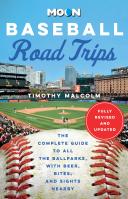
Savannah has a long and important history with the national pastime. In fact, the first known photograph of a baseball game was taken in Fort Pulaski, of Union occupation troops at play on the parade ground.
A pivotal figure in baseball history also has a crucial association with Savannah. Long before gaining notoriety for his role on the infamous Chicago “Black Sox” that threw the 1919 World Series, baseball legend Shoeless Joe Jackson was a stalwart on the South Atlantic or “Sally” League circuit. Playing for the Savannah Indians in 1909, Joe played ball predominantly at Bolton Street Park off what’s now Henry Street. That year Jackson hit .358, a Sally League performance bested only twice that century.
The South Carolina native must have remembered his days in Savannah fondly, for after his career ended ignominiously Joe returned to town, began a thriving dry-cleaning business, and lived with his wife at 143 Abercorn Street and then on East 39th Street. No doubt tired of the jokes up north about his Southern accent and his alleged illiteracy — the degree of which is a matter of some dispute — Joe said he simply felt more at home here.
Another early great who played in Savannah was Georgia native Ty Cobb, who visited in 1905 with an Augusta team. He’s remembered, typically enough, for getting into a fistfight with a teammate who voiced his displeasure at Cobb eating popcorn in the outfield and muffing an easy catch.
Savannah got a proper ballpark in 1926, named Municipal Stadium. After a hurricane destroyed it in 1940, rebuilding began but abruptly stopped when Pearl Harbor was attacked the next year and all the laborers rushed off to enlist. So abruptly did they drop their tools, in fact, that to this day behind third base you can still clearly see the jagged line indicating where construction halted. The stadium was renamed Grayson Stadium in honor of Spanish-American War hero William Grayson, who spearheaded the venue’s eventual renovation.
The great Babe Ruth played in the stadium once in 1935 in his final year as a major leaguer, as his Boston Braves beat the South Georgia Teachers College (now Georgia Southern University) 15–1 in an exhibition game. Ruth, of course, hit a home run.
There’s a common thread between Jackson and Babe Ruth, who wasn’t known as a hitter until after he’d already established himself as a standout pitcher. Shoeless Joe — perhaps the game’s most consummate hitter until Ted Williams’ arrival on the scene 30 years later — tried to change Ruth’s stance in the batter’s box to improve his hitting. The rest, as they say, is history.
Mickey Mantle and the defending world champion New York Yankees played the Cincinnati Reds in a 1959 exhibition game in Savannah. The switch-hitting slugger hit two of his trademark mammoth home run shots during the game — both left-handed and each over 500 feet, according to witnesses.
Atlanta Braves great Hank Aaron, then a skinny second baseman with a Jacksonville club, played in Grayson’s first game with both black and white players in 1953. Frank Robinson played one of the first games of his storied career here with the Columbia Reds. He showed up late to the game and still hit two home runs. Jackie Robinson stole home base in an exhibition game.
But in a way, all these names pale in comparison to one Savannah player whose influence can be felt to this day, not only in sports but in the business world at large: Curt Flood gave the world free agency.
Flood, who played for the Savannah Redlegs in 1957, refused to report to the Phillies after the Cardinals traded him in 1969. Flood sued Major League Baseball the next year, saying the so-called “reserve clause” allowing the trade violated antitrust laws. While Flood would lose the lawsuit in the U.S. Supreme Court, the narrowly worded decision left the way open for collective bargaining and today’s massive free agent salaries.
The Savannah minor league team has taken on various incarnations over the years. The 1962 Savannah White Sox was the most successful, contributing an amazing 14 players to the majors. But the taste of success was short-lived. That was the year local civil rights great W. W. Law, then a postman, called for African Americans to boycott Grayson Stadium to protest its segregated seating policy. (The concession stand off the third base line is a reminder of that shameful era. It was once the “colored” restroom.)
Rather than risk violence at the stadium, the White Sox disbanded. Grayson was dormant until the Savannah Braves, a double-A team, began a very successful run in 1971 (including a 12-game winning season by pitcher and controversial Ball Four writer Jim Bouton), followed in 1984 by the Savannah Cardinals.
The current single-A team, the Savannah Sand Gnats, had their name chosen by a poll of daily newspaper readers. While their level of play rarely conjures mental images of Shoeless Joe or the Babe, Grayson Stadium itself has just been given an impressive new facelift courtesy of the city, with a new scoreboard and upgraded seating. By far the Sand Gnats’ most famous face so far has been Cy Young Award–winning pitcher Eric Gagne, who pitched his very first professional game with the local club.
© Jim Morekis from Moon Charleston & Savannah, 4th Edition
Buy Moon Travel Guides
Search
Moon Travel Guides make independent travel and outdoor exploration fun and accessible. With expert and adventurous travel writers delivering a mix of honest insight, first-rate strategic travel advice, insider travel tips and an essential dose of humor, Moon Travel Guides ensure that travelers have an uncommon and entirely satisfying experience. Each travel book is filled with unique trip ideas, easy-to-use maps, and detailed information on sights, restaurants, and accommodations. Moon Travel Guides not only point you in the right direction, they inspire new ideas and adventure. Whether you are seeking a relaxing beach trip to Hawaii, or an adventure travel trip to the rainforests of Costa Rica, Moon guidebooks—and Moon.com—are with you every step of the way. Founded in 1973, the Moon Travel Guides series includes Moon Handbooks, Moon Outdoors, Moon Metro, Moon Living Abroad and Moon Spotlight travel books. Moon is based in Berkeley, California and is a proud member of the Perseus Books Group.