
























Coral Reefs
Trip Ideas
Cozumel’s coral reef—and the world-class diving and snorkeling it provides—is the main reason people come to the island. The reef was designated a national marine reserve more than two decades ago, and the waters have thrived under the park’s rigorous protection and clean-up programs.
In 2005, Hurricane Wilma took a major toll on the reef, snapping off coral and sponges with its powerful surge and leaving other sections smothered under a thick layer of sand and debris. But hurricanes are nothing new to Cozumel or its coral, and reports of vast damage to the reef were greatly exaggerated. Cozumel’s underwater treasure remains very much alive, supporting a plethora of creatures, its seascapes as stunning as ever.
Dozens of dive and snorkeling sites encircle the island, and the 1,000-meter-deep (3,281-foot) channel between Cozumel and the mainland still provides spectacular drift and wall dives. What follows is a list of some of the most popular dives, though by no means all of the worthwhile ones.
Click here for information on Cozumel's dive shops.
Santa Rosa Wall
With a sensational drop-off that begins at 22 meters (72.2 feet), this spectacular site is known for its tunnels, caves, and stony overhangs. Teeming with sealife, it’s home to translucent sponges, mammoth sea fans, file clams, horse-eyed jacks, fairy basslets, gray angelfish, and black groupers. Strong currents make this a good drift dive, especially for experienced divers. Depth ranges 5–27 meters (15–90 feet).
Palancar
This spectacular five-kilometer-long (3.1-mile) dive spot is actually made up of five different sites—Shallows, Garden, Horseshoe, Caves, and Bricks. It is known for its series of enormous coral buttresses. Some drop off dramatically into winding ravines, deep canyons, and passageways; others have become archways and tunnels with formations 15 meters (49.2 feet) tall. The most popular site here is Palancar Horseshoe, which is made up of a horseshoe-shaped series of coral heads at the top of a drop-off. All the sites, however, are teeming with reef life. Palancar ranges in depth 5–40 meters (15–120 feet).
Airplane Wreck
A 40-passenger Convair airliner lies on Cozumel’s seabed, about 65 meters (195 feet) from the shore near the El Cid hotel. Sunk in 1977 for the Mexican movie production of Survive II, the plane has been broken into pieces and strewn about the site by years of storms. The site itself is relatively flat, though with parrot fish, damselfish, and a host of sea fans and small coral heads, there’s plenty to see. With depth ranges of 3–15 meters (9–45 feet), this is a good site for snorkelers, too.
Paraíso
Just south of the international pier, and about 200 meters (656 feet) from shore, lies Paraíso, an impressive three-lane coral ridge. Medium-size coral—mostly brain and star—attract sergeant majors, angelfish, grunts, squirrel fish, and snappers. This site also is popular for night dives because of its proximity to hotels, which means less time on the boat. Depth ranges 5–13 meters (15–40 feet). Snorkeling is decent near the shore, but be very careful of boat traffic.
Dzul-Há (aka The Money Bar)
Located off the old coastal road (Km. 6.5), Dzul-Há is one of the best spots for snorkeling from shore, with small coral heads and sea fans that support a colorful array of fish like blue tangs, parrot fish, and queen angels. Steps lead into the ocean, where depths range 3–10 meters (10–30 feet). You can rent snorkel gear on-site for US$14, including the marine park fee (US$2).
Tormentos
At this site divers can see about 60 coral heads, each decorated with an assortment of sea fans, brain and whip corals, and sponges. Invertebrates like to hide out in the host of crevices—look for flamingo tongue shells, arrow crabs, and black crinoids. Lobster like the scene, too—keep your eyes peeled for them, especially at the north end of the site. Depth ranges 5–15 meters (15–50 feet). The site is popular with photographers.
Yucab
A perfect drift dive, Yucab has archways, overhangs, and large coral heads—some as tall as three meters (10 feet)—that are alive with an incredible array of creatures: Lobsters, octopus, scorpionfish, banded coral shrimp, and butterfly fish can almost always be found here. Videographers typically have a field day. Depth ranges 5–15 meters (15–50 feet).
Punta Tunich
Punta Tunich usually has a 1.5-knot current, which makes it an excellent high-velocity drift dive. The site itself has a white-sand bottom with a gentle downward slope that ends in a drop-off. Along the way, the reef is dotted with finger coral and elephant ear sponges. Divers regularly encounter eagle rays, barracuda, sea horses, bar jacks, and parrot fish. The depth ranges 5–18 meters (15–60 feet).
Paso del Cedral
A strip reef lined with small corals like disk and cactus, this site attracts large schools of fish like blue striped grunts and snapper—perfect for dramatic photographs. Southern stingrays often are seen gliding over the sandy areas just inside the reef. Depths range 10–20 meters (30–60 feet).
Colombia
An enormous coral buttress, Colombia boasts tall coral pillars separated by passageways, channels, and ravines. Divers enjoy drifting past huge sponges, anemones, and swaying sea fans. Larger creatures—sea turtles, groupers, nurse sharks, and southern stingrays—are commonly seen here. This drift dive is recommended for experienced divers. Depths range 5–40 meters (15–120 feet).
Maracaibo
At the island’s southern tip, Maracaibo is a deep buttress reef interspersed with tunnels, caves, and vertical walls. It is known for its immense coral formations as well as the possibility of spotting large animals—sharks (black tip and nurse) as well as turtles and eagle rays. A deep-drift dive, this site is recommended for advanced divers only. Depths range 30–40 meters (90–120 feet).
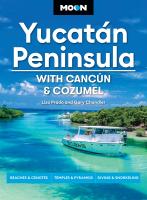
© Gary Chandler & Liza Prado from Moon Yucatán Peninsula, 9th edition
Buy Moon Travel Guides
Search
Moon Travel Guides make independent travel and outdoor exploration fun and accessible. With expert and adventurous travel writers delivering a mix of honest insight, first-rate strategic travel advice, insider travel tips and an essential dose of humor, Moon Travel Guides ensure that travelers have an uncommon and entirely satisfying experience. Each travel book is filled with unique trip ideas, easy-to-use maps, and detailed information on sights, restaurants, and accommodations. Moon Travel Guides not only point you in the right direction, they inspire new ideas and adventure. Whether you are seeking a relaxing beach trip to Hawaii, or an adventure travel trip to the rainforests of Costa Rica, Moon guidebooks—and Moon.com—are with you every step of the way. Founded in 1973, the Moon Travel Guides series includes Moon Handbooks, Moon Outdoors, Moon Metro, Moon Living Abroad and Moon Spotlight travel books. Moon is based in Berkeley, California and is a proud member of the Perseus Books Group.