










































Caraíva

printer iconPrintemail iconEmailfavorites iconSave to Favorites

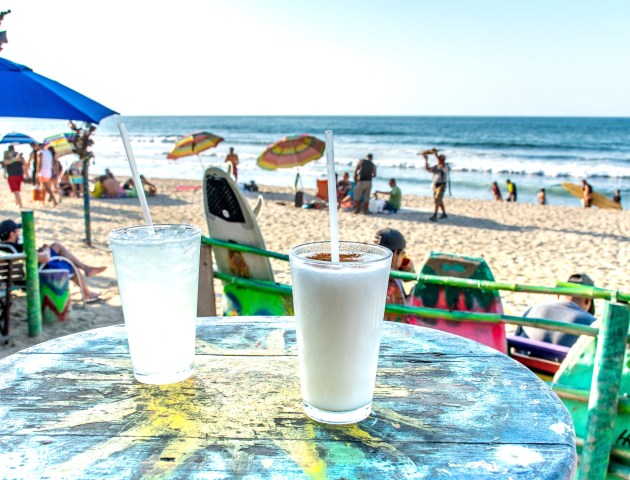
Off the beaten track—which has left it gloriously intact from developers’ radar—Caraíva is most people’s fantasy of an idyllic tropical getaway. On the banks of the Rio Caraíva, this tiny fishing village is surrounded by the thick vegetation of mangroves as well as wonderfully deserted white beaches that extend for kilometers in both directions. Its few roads are paved with silky sand instead of asphalt, which hardly matters since no cars exist. If you want to get around, you can hire a donkey-driven wooden chariot or jump into a dugout canoe.

Meanwhile, after a 10-year battle with the national energy company, Caraíva finally received electricity in July 2007. However, since residents are used to lanterns and candles, you’ll still be able to wander around at night with little more than moonlight and starlight to guide you. There isn’t much to do in Caraíva. But if all you want to do is completely relax, in idyllic natural surroundings, it is incomparable.

Beaches

Caraíva boasts some of the most unspoiled and downright beautiful beaches along the Bahian coast. You can walk for hours and there is barely any construction in sight to break the brilliant green of native Atlantic forest and swaying coconut palms. Going south from the Praia da Caraíva, the beaches will take you past the Parque Nacional Monte Pascoal, a nature preserve which is also partially occupied by the Barra Velha Pataxó reservation (excursions can be organized from Caraíva), all the way down to the splendidly isolated beaches of Barra do Cai and Ponta do Corumbau, where there is wonderful diving.

Once you take a canoe across the Rio Caraíva, you can also make your way north along the coast. A 4-kilometer (2.5-mile) walk brings you to the Praia de Satu. Cutting into the red cliffs crowned with jungle are freshwater lagoons where you can swim. Continuing on, these cliffs become increasingly dramatic until you reach Praia de Espelho and Praia de Curuípe, 9 kilometers (6 miles) and 12 kilometers (7.5 miles), respectively, from Caraíva.

Among Brazilian travel writers and hardcore beach aficionados, Praia de Espelho ranks at the top of the “Best Beaches” lists that are frequently compiled. This means that frequent boatloads of tourists show up from Porto Seguro and Arraial d’Ajuda. However, given Caraíva’s proximity, you can beat the crowds and enjoy the sheer beauty of the place in splendid isolation.

For more information about boat and diving excursions to any of these nearby beaches, contact Navegação Caraíva (tel. 73/9985-0241) or Pará at the Boteco do Pará (tel. 73/9991-9804), both on the Rua Beira-Rio.

Accommodations and Food

Like everything in Caraíva, hotels are pretty rustic, although they range from very basic to atmospheric. The most attractive of them all is the Pousada da Lagoa (tel. 73/9985-6862, www.lagoacaraiva.com.br, R$90–160 d). Brightly painted cabins are nestled among abundant foliage, in the middle of which is a small lagoon. In spite of the recent arrival of electricity, candles are still provided in all the bedrooms and bathrooms. The restaurant serves up nicely prepared fine meals (the breakfasts are delicious) and on summer nights, it serves as bohemian headquarters to the mellow crowd that congregates to listen to great canned and live music.

For immediate beach access, a fairly nice option is the Pousada Cores do Mar (tel. 73/3668-5090, www.caraiva.com.br, R$90 d). Also beachfront—and riverfront as well—are the pumpkin-colored bungalows belonging to the Pousada da Barra (tel. 73/9885-4302, www.caraiva.com.br, R$70 d). Rooms are simple but airy, and stepping outside means literally stepping into soft sand.

For food, two riverside eateries serve up delicious fare while offering mesmerizing views of the lazy Rio Caraíva and the emerald green vegetation along its banks. Pará, the owner of Boteco do Pará (Rua Beiro-Rio, tel. 73/9991-9804, open daily 11 a.m.–last client high season, 11 a.m.–10 p.m. Tues.–Sun. low season, R$20–35) has his own fishing boat, which guarantees the freshness of the fish and moquecas at this traditional eatery. Tables are shaded by an immense almond tree and adjacent to the Ponto dos Mentirosos (Liars’ Spot), where fishermen traditionally congregate to tell tall tales.

Further down, candle- and lantern-lit Bar do Porto (Rua Beira Rio, 7 p.m.–last client) serves drinks as well as tasty pizzas baked in its wood-burning oven.

Getting to Caraíva

Two daily buses operated by Viação Águia Azul (tel. 73/3668-1110) connect Arraial d’Ajuda and Trancoso to Caraíva along a dirt road that’s hard to navigate during the rainy season. From Trancoso, the journey takes about 90 minutes. There is also boat service from Porto Seguro with Cia do Mar (tel. 73/3288-2107).

Buy Moon Travel Guides

Loading books
loading
For more Moon travel information, sign up for our monthly e-newsletter for updates on new travel guide releases, travel tips and trip ideas for those seeking adventure or relaxation, and expert advice from our on-the-go Moon travel authors.

Find Activities>>

Moon Travel Guides make independent travel and outdoor exploration fun and accessible. With expert and adventurous travel writers delivering a mix of honest insight, first-rate strategic travel advice, insider travel tips and an essential dose of humor, Moon Travel Guides ensure that travelers have an uncommon and entirely satisfying experience. Each travel book is filled with unique trip ideas, easy-to-use maps, and detailed information on sights, restaurants, and accommodations. Moon Travel Guides not only point you in the right direction, they inspire new ideas and adventure. Whether you are seeking a relaxing beach trip to Hawaii, or an adventure travel trip to the rainforests of Costa Rica, Moon guidebooks—and Moon.com—are with you every step of the way. Founded in 1973, the Moon Travel Guides series includes Moon Handbooks, Moon Outdoors, Moon Metro, Moon Living Abroad and Moon Spotlight travel books. Moon is based in Berkeley, California and is a proud member of the Perseus Books Group.