











South America Blog
About this blog
Wayne Bernhardson is the author of Moon Handbooks to Buenos Aires, Chile, Argentina, and Patagonia. Here he shares his vast knowledge of South America and its people.
Recent Posts
- The Papal Cumbia
- The Uruguayan Sacraments: Tango & Mate
- Taxing the Tourist: Argentina's AFIP Aims Low
- Fortress Falklands: A Book Review
- Pope Argentinus I, The Musical: Ragtime Meets Tango
- Credit Where Credit Is Undue?
- ¿Adios Hugo?
- When "No" Is A Positive
- Chile and Its "Crazies"
- The Oscars: A Post Mortem, So to Speak
- Sacrificing the Atacama? A Chilean View of Dakar
- Chilean Oscar Faceoff? "No" v. "Kon-Tiki"
- Friday Digest: Southern Cone Nuggets
- Dancing in the Mud? The Andean Aftermath
- Floods & Mud: Summer Storms Hit the Andes

La Cuarenta: Argentina's Top Road Trip
From the Bolivian border near La Quiaca to its southern terminus near Río Gallegos, Ruta Nacional 40 is Argentina’s great unfinished interior highway. Some segments of “La Cuarenta,” in the central Cuyo provinces, are smoothly paved, while others in the Andean northwest are rough and rugged. None of those, though, enjoys the notoriety of the segment between the El Calafate junction and the town of Perito Moreno, on the cusp between the Patagonian steppe and the icy southern Andes.
On the drier eastern side of the Andes, roughly parallel to Chile’s Carretera Austral, it may not be Argentina’s loneliest road - some of the dead-end routes that spin off it seem simply abandoned. But for Argentines and foreigners alike, it’s become the standard for adventurous driving and cycling, thanks to its secluded Andean lakes, isolated estancias (guest ranches), plentiful wildlife, and rare sights like the pre-Columbian rock art of Cueva de las Manos (Cave of Hands). Even the advent of (infrequent) public transportation has not diminished its mystique.
As late as the early 1990s, it was possible to drive the southernmost stretch without seeing any other vehicles, and services were almost nil. Since then, traffic has not exactly burgeoned, but the summer season sees a small but steady procession of motorists, motorcyclists, and bicyclists. A selective bunch, at least, have absorbed Darwin’s insight that the appeal of the bleak Patagonian plains was “the free scope given to the imagination.”
It’s clearly not for everyone, though, and a trip up or down La Cuarenta requires planning. With accommodations and supplies few and far between, bicyclists and motorcyclists must carry tents and cold-weather gear, even in midsummer, and plenty of food. Detailed maps, like the Automóvil Club Argentino’s newest regional sheets, are essential. Preferably, automobiles should carry at least two spare tires.
Also carry extra fuel - between El Calafate and Perito Moreno, the only dependable supplies are at El Chaltén (a 90-km detour), Tres Lagos, Gobernador Gregores (a 70-km detour), and Bajo Caracoles (it sometimes runs out). Some tourist estancias will sell gasoline to their clients or in an emergency, but don’t count on it.
Road hazards are numerous. Bicyclists and motorcyclists must contend with powerful Patagonian winds that can knock them down in an instant, and deep gravel adds to the danger. Even high-clearance vehicles are vulnerable to flipping on loose gravel, especially when braking suddenly, and 50-knot gusts make things worse. Though four-wheel drive is not essential, some drivers prefer it to avoid fishtailing on gravel.
Chipped, cracked, and even shattered windshields are par for the course on RN 40 and other graveled roads. Normally, rental-car insurance policies do not cover such damage, and replacements are expensive in Argentina (though fairly cheap in Punta Arenas, Chile). Approaching vehicles usually brake to minimize the possibility of such damage, but some drivers find they need to play chicken to slow down an onrushing pickup truck or SUV.
The big news is that within a few years, thanks to former Santa Cruz governor (later Argentine president) Néstor Kirchner, this segment of RN 40 will be entirely paved and may be rerouted to pass through Gobernador Gregores. Hearing that RN 40 will be paved evokes enough nostalgia for a tango, but there will remain plenty of unpaved gravel roads.
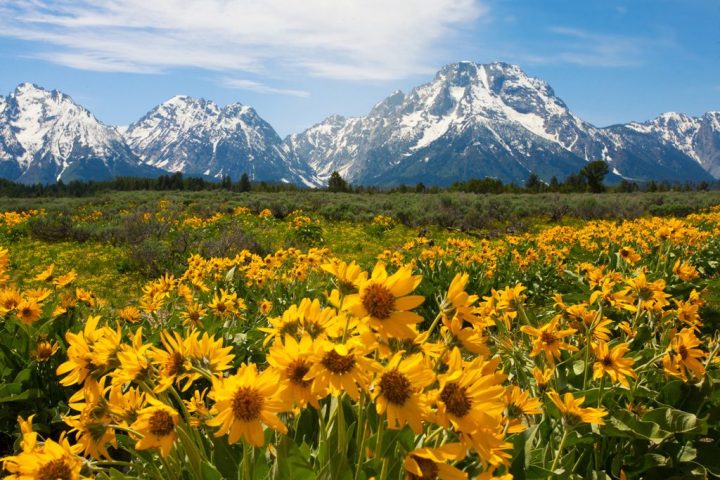
If driving or cycling doesn’t appeal to you, but you still want to see the loneliest highway, summer bus and minivan services now connect El Calafate and El Chaltén, at the south end, with Perito Moreno and Los Antiguos at the north end of the province, and with Bariloche. There are also four-day overland safaris from Bariloche to El Calafate that overnight in Río Mayo (Chubut), Estancia Los Toldos (for Cueva de las Manos), and Estancia Menelik (for visits to Parque Nacional Perito Moreno, pictured above).
Buy Moon Travel Guides
Search
Moon Travel Guides make independent travel and outdoor exploration fun and accessible. With expert and adventurous travel writers delivering a mix of honest insight, first-rate strategic travel advice, insider travel tips and an essential dose of humor, Moon Travel Guides ensure that travelers have an uncommon and entirely satisfying experience. Each travel book is filled with unique trip ideas, easy-to-use maps, and detailed information on sights, restaurants, and accommodations. Moon Travel Guides not only point you in the right direction, they inspire new ideas and adventure. Whether you are seeking a relaxing beach trip to Hawaii, or an adventure travel trip to the rainforests of Costa Rica, Moon guidebooks—and Moon.com—are with you every step of the way. Founded in 1973, the Moon Travel Guides series includes Moon Handbooks, Moon Outdoors, Moon Metro, Moon Living Abroad and Moon Spotlight travel books. Moon is based in Berkeley, California and is a proud member of the Perseus Books Group.